
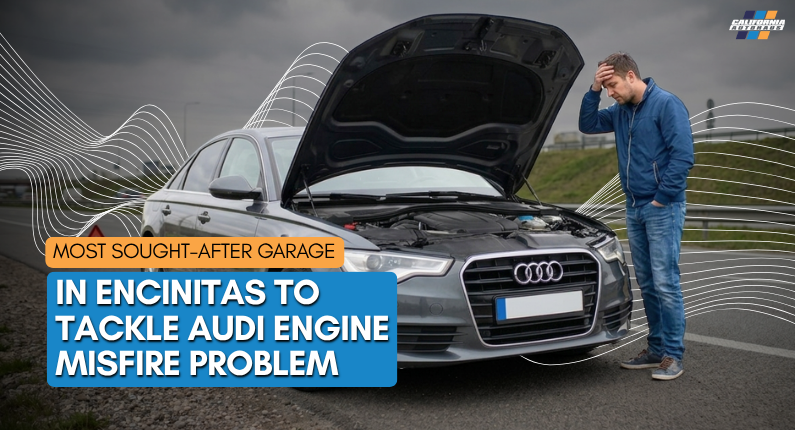
Audi builds some of the most technically sophisticated cars on the road — turbocharged engines, precision-tuned fuel delivery systems, and ignition timing calibrated to fractions of a degree. When one of those cylinders stops firing correctly, the whole system feels it. A misfire in an Audi isn’t a nuisance; it’s a signal that something in a tightly engineered system has gone wrong and needs to be addressed before it cascades. California Autohaus has been serving Encinitas drivers since 2005, and Audi engine misfires are among the most common diagnostics they handle. If you’re dealing with rough idle, a flashing check engine light, or hesitation under acceleration, here’s what’s going on inside your Audi’s engine and what it takes to fix it properly.
What an Engine Misfire Actually Means
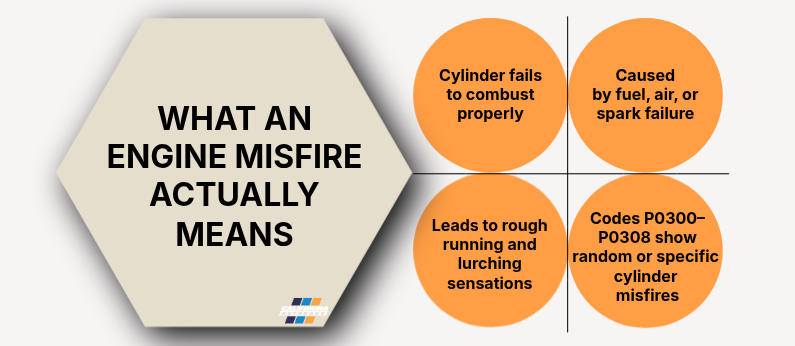
A misfire occurs when one or more cylinders in your engine fails to complete a proper combustion cycle. Fuel enters the cylinder, air mixes with it, and the spark plug ignites the charge — but if any one of those steps fails or happens at the wrong moment, the cylinder misfires. The unburned fuel and the mechanical interruption cause the rough, lurching sensation most Audi drivers describe. On modern Audis, the ECU tracks combustion events in real time and logs misfire codes when a cylinder falls outside tolerance. Codes P0300 through P0308 identify which cylinder is involved — or in the case of P0300, a random multi-cylinder misfire that points toward a systemic cause rather than a single failed component. Diagnosing an Audi misfire correctly requires reading those codes in the right context, not just replacing the most common part and hoping the problem disappears.
Ignition System Failures: Coils, Plugs, and Timing
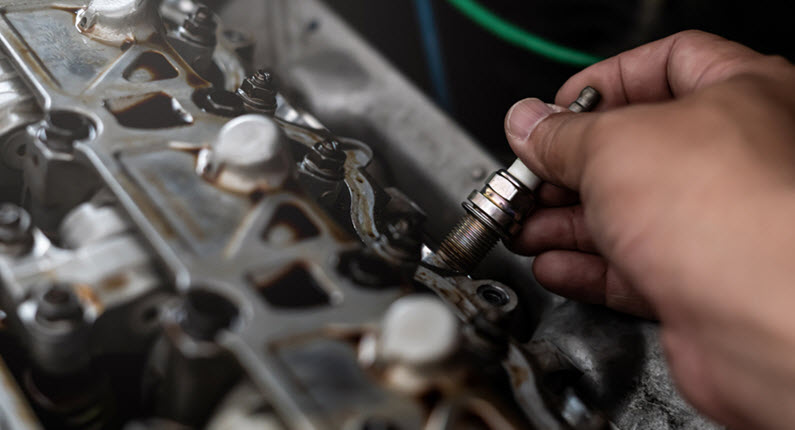
The most frequent cause of Audi misfires is ignition system failure, particularly with the coil-on-plug setup used in most modern Audi four- and six-cylinder engines. Each cylinder has its own ignition coil, and those coils degrade over time — sometimes failing abruptly and sometimes producing weak spark intermittently before complete failure. When a coil weakens, the cylinder misfires under load or at idle, and the pattern often shifts if the coil is swapped to a different cylinder. Spark plugs compound the problem when they’re worn or fouled; Audi recommends replacement intervals that many owners miss, and degraded plugs demand more from an already-stressed coil. Timing-related misfires can also occur when timing chain stretch alters valve timing on higher-mileage Audis — a more serious repair that requires teardown to correct.
Direct Injection Carbon Buildup: An Audi-Specific Problem
Audi’s turbocharged FSI and TFSI direct injection engines are efficient and powerful, but they carry a well-known vulnerability: carbon buildup on the intake valves. In a port-injected engine, fuel washes the intake valves clean on every cycle. In a direct injection engine, fuel enters the combustion chamber directly and never contacts the valves. Over time, oil vapors from the PCV system coat the intake valves with carbon deposits that restrict airflow into the cylinder. The result is rough running, misfires at cold start, and reduced performance that worsens as mileage climbs. Cleaning the intake valves on an Audi FSI engine requires walnut media blasting — a shop-specific procedure that removes the deposits without damaging valve seats or guide seals. California Autohaus has the equipment and experience to perform this service correctly, restoring the airflow the engine was designed to receive.
Fuel System and Vacuum Leak Causes
Not every Audi misfire starts at the ignition system. Fuel injector fouling or failure can prevent a cylinder from receiving the proper fuel charge even when spark and timing are correct. High-pressure fuel pump failure — a known issue on early FSI engines — drops system pressure and causes lean misfires across multiple cylinders simultaneously. Vacuum leaks in the intake tract, particularly on turbocharged Audis, where boost pressure stresses intercooler couplers and intake hoses, can introduce unmeasured air and lean out the fuel mixture enough to trigger misfires. A proper diagnosis at California Autohaus goes through all of these potential causes systematically, using factory-level scan tools that read Audi-specific data beyond what generic OBD readers capture.
California Autohaus: Encinitas’s Audi Specialist Since 2005
California Autohaus at 386 Encinitas Boulevard has spent nearly two decades becoming the go-to independent alternative to the Audi dealership for drivers throughout Encinitas, Carlsbad, Solana Beach, Del Mar, and Rancho Santa Fe. Their ASE-certified technicians work exclusively on European and luxury vehicles — Audi, BMW, Mercedes, Porsche, Land Rover, Jaguar, Volkswagen, and more — using the same diagnostic equipment and genuine parts that dealerships rely on. Every repair is backed by a 3-year/36,000-mile warranty. If your Audi is misfiring, call (760) 334-0193 to schedule a diagnostic and get the right answer the first time.
FAQ
What causes an Audi engine to misfire?
Common causes include failed ignition coils, worn spark plugs, carbon buildup on intake valves (common on FSI/TFSI engines), fuel injector issues, high-pressure fuel pump failure, and vacuum leaks in the intake system.
What does a flashing check engine light mean on an Audi?
A flashing check engine light specifically indicates an active misfire severe enough to damage the catalytic converter. Drive gently and have the vehicle inspected immediately — continuing to drive with a flashing CEL can cause expensive secondary damage.
How do you fix carbon buildup on Audi intake valves?
The correct method is walnut media blasting, a procedure that uses walnut shell media under pressure to dislodge carbon deposits from the intake valves without damaging the valve or seat surfaces. This requires specialized equipment and cannot be done with fuel additives alone.
Does California Autohaus work on all Audi models?
Yes. California Autohaus services the full Audi lineup, including A3, A4, A6, A8, Q3, Q5, Q7, TT, and S and RS models, covering both routine maintenance and complex engine diagnostics and repairs.