Brake Repair in Encinitas for European Cars
What Our Brake Repair in Encinitas Covers
Brakes are the one system on your car where waiting it out has no upside. The good news is that brakes almost always warn you first — a squeal, a pulse through the pedal, a stop that takes longer than you expected — and caught at that stage, brake repair in Encinitas is usually pads and rotors rather than anything dramatic.
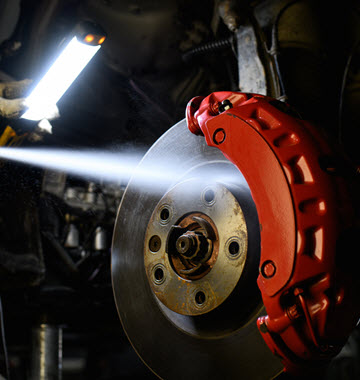
European cars wear brakes differently from most. Softer, higher-friction pad compounds stop the car harder and shed more dust; rotors are often drilled or slotted and have a minimum thickness they must not go below; and electronic parking brakes need a scan tool to retract before the rear pads will come out at all. AAA’s short guide to the four signs your brakes need service covers what to listen and feel for.
Our ASE-certified technicians handle pads and rotors, calipers and hoses, brake fluid flushes, ABS and wear sensor faults, and electronic parking brake service on the cars that use one — for Audi, BMW, Mercedes-Benz, Porsche, Volkswagen, Volvo, MINI, Jaguar, Land Rover and Sprinter vans. See our pages for Audi repair, BMW repair, Mercedes repair and Land Rover repair.






Signs You Need Brake Repair in Encinitas
Strange Noises
A squeal under light braking is usually the wear indicator doing its job — a thin metal tab designed to make that noise when the pads get low. A grind is different. That is metal on metal, and the rotor is being damaged every time you stop. We measure pad thickness and rotor condition rather than guessing from the sound.
Brake Pedal Vibration
A pulse through the pedal on a steady stop usually means the rotors have uneven thickness, more often from a pad deposit than from a literally warped disc. We measure runout and thickness variation with the wheels off, then resurface or replace depending on how much material is left against your car’s stamped minimum.
Soft or Spongy Brake Pedal
A pedal that sinks slowly or feels soft points to air in the lines, a fluid leak, or old brake fluid that has absorbed moisture and lost its boiling point. We pressure-test the system, check every hose and caliper for weeping, and flush with the correct DOT specification. This is the one symptom we would not ask you to drive on.
Brake Warning Lights
European cars report low fluid, a worn pad sensor and an ABS fault separately, and the difference matters. We read codes from the ABS and stability control modules rather than resetting the light, so you learn whether it is an inexpensive wear sensor or a wheel speed sensor that changes how the car brakes in the wet.
Car Pulls to One Side While Braking
Pulling under braking usually comes from a sticking caliper slide pin, a collapsed flexible hose acting like a one-way valve, or pads worn unevenly across the axle. We compare pad thickness side to side, check caliper travel, and road-test afterward to confirm the car tracks straight when you stop hard.
Located in Encinitas, we proudly service drivers from

 Encinitas
Frequently Asked Questions
How much does brake repair in Encinitas cost?
It depends on what the car needs — front pads and rotors on a MINI and a four-corner job with sensors and an electronic parking brake on a Range Rover are different pieces of work. We inspect and measure first, then quote before starting, so you get a real number rather than a range.
Why does my brake pedal feel soft or spongy?
Most often air in the lines, a fluid leak, or brake fluid that has absorbed moisture over the years and lost its boiling point. All three reduce how hard the car can stop, and a leak only gets worse. Have it looked at before you drive on it — book brake repair in Encinitas the same week.
Are noisy brakes always dangerous?
Not always. A light squeal after a wet night is usually surface rust burning off over the first few stops. A squeal that happens every time, or any grinding at all, is the pads telling you they are finished. Constant noise is worth an inspection.
How long do brake pads last on a European car?
Anywhere from about 25,000 to 60,000 miles depending on the car, the pad compound and how you drive. Performance pads on a heavier car in stop-and-go traffic sit at the low end of that. We measure pad thickness at every service, so you get warning rather than a surprise.
What does the ABS light mean on my dashboard?
It means the anti-lock system has logged a fault and switched itself off, most often a wheel speed sensor. Your normal brakes still work, but you lose ABS and usually stability control with it, which matters most in the wet. We read the codes to find which corner is at fault.
Can rotors be resurfaced, or do they need replacing?
Only if there is enough material above the minimum thickness stamped on the rotor, and on many European cars there is not. We measure rather than assume. Resurfacing a rotor that is already near its minimum just means it distorts again sooner.
Do you repair brakes on Audi, BMW, Mercedes and Land Rover?
Yes, along with Porsche, Volkswagen, Volvo, MINI, Jaguar and Sprinter vans. Our ASE-certified technicians have the scan tools to retract electronic parking brakes and reset wear sensors, which is the practical difference between a European brake job and a generic one.