
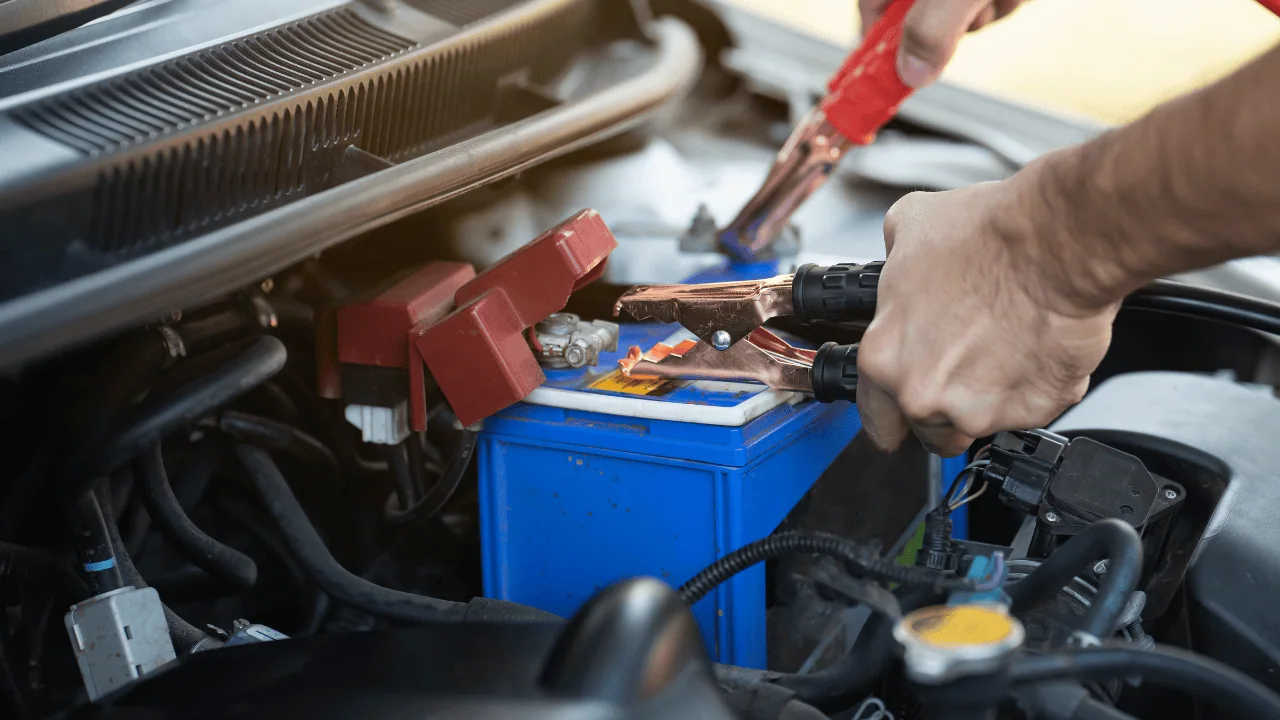
If you’ve noticed slow cranking, a battery warning light, or electronics acting up in your BMW, Mercedes-Benz, or Audi, you may be closer to needing European car battery replacement than you think. Unlike most domestic cars, these vehicles treat the battery as part of a computer-managed electrical system, and that changes how a replacement should be done.
In this article:
- Why European Car Battery Replacement Isn’t Just Swap-and-Go
- AGM vs. Standard Batteries
- BMW Battery Replacement: What’s Different
- Mercedes-Benz Battery Replacement
- Audi Battery Replacement
- The Battery Registration Process
- DIY Battery Replacement Risks
- How Encinitas’ Climate Affects Your Battery
- Cost: What to Expect
- Battery Maintenance Tips
- Warning Signs You Need a New Battery
- How Often Should You Replace Your Car Battery?
- Common Myths
- Why Choose California Autohaus
- What to Expect at Your Visit
- FAQ
Why European Car Battery Replacement Isn’t Just Swap-and-Go
On most older or domestic vehicles, a battery is just a battery: pull the old one, drop in a new one, done. European cars are different. BMW, Mercedes-Benz, and Audi all use a Battery Management System that tracks the battery’s exact age, condition, and charging behavior.
Swap the battery without registering the new one in the car’s software, and the system keeps charging based on the old battery’s wear data. That can shorten the life of the new battery, trigger dashboard warnings, or unsettle start-stop and regenerative charging systems. This is the core reason proper European car battery replacement is a shop job, not a driveway one.
AGM vs. Standard Batteries: Why the Wrong Choice Fails Early
Not all batteries are built the same, and this matters more for European car battery replacement than most drivers realize. Most BMW, Mercedes-Benz, and Audi models built since the early 2010s ship from the factory with an AGM (Absorbent Glass Mat) battery, not the flooded lead-acid battery still found in many domestic cars. AGM batteries handle the deep discharge cycles of start-stop technology, power the electrical load of adaptive cruise control and lane-assist systems, and recover charge faster than a standard battery.
Installing a cheaper flooded battery in a car engineered for AGM is one of the most common mistakes we see when a European car battery replacement is done outside a specialist shop. The car’s charging system is tuned for AGM voltage curves, so a flooded battery in that slot tends to undercharge, sulfate prematurely, and fail again within a year, sometimes taking the alternator down with it. Getting the battery chemistry right the first time is just as important as registering it correctly.
BMW Battery Replacement: What’s Different
Most BMWs built in the last 15 years require the new battery to be registered through the car’s diagnostic system immediately after installation. Skipping this step is one of the most common reasons a “simple” battery swap leads to a comeback visit with a Battery Safe Mode warning or charging fault on the dash.
We also confirm the correct AGM (Absorbent Glass Mat) specification for your model. Most BMWs need it, and a standard flooded battery won’t handle the car’s start-stop demands the same way.
Mercedes-Benz Battery Replacement
Mercedes-Benz models add another layer: many use the battery’s data to manage the alternator’s charging voltage over time. An unregistered replacement can leave the alternator working harder than it needs to, which shortens both battery and alternator life.
We test the charging system alongside every Mercedes-Benz battery replacement, so you’re not paying for a second repair a few months later.
Audi Battery Replacement
Audi’s battery is frequently mounted in the trunk rather than the engine bay, and many models also require software registration after replacement. Skipping it can affect how the car manages its electrical load, especially on models with extensive driver-assistance and infotainment systems.
The Battery Registration Process: What Actually Happens
Ask most drivers what “registering” a battery means and you’ll get a shrug. Here’s what actually happens during a proper European car battery replacement at our shop:
- We read the old battery’s data first. Before disconnecting anything, we pull the stored battery age, health, and charging history from the car’s Battery Management System so we know what the new battery needs to correct for.
- We confirm the exact spec. Amperage, AGM vs. EFB, and physical size all vary by trim and model year, even within the same generation of BMW, Mercedes-Benz, or Audi.
- We install and register through the diagnostic system. This step tells the car’s computer that a new battery, with zero wear, is now in place, so the charging system stops compensating for a battery that no longer exists.
- We verify the fix. We clear any stored fault codes related to the old battery and confirm the charging voltage settles where it should.
Skip the registration step and the car keeps “protecting” a battery that isn’t there anymore, which is exactly how a comeback happens two or three months after a battery replacement.
DIY Battery Replacement: Why It’s Riskier Than It Looks on a European Car
We’re not going to tell you that you can’t swap your own battery. You can. But a DIY European car battery replacement on a modern BMW, Mercedes-Benz, or Audi carries risks that don’t exist on older or domestic vehicles:
- Losing settings. Disconnecting the battery without a memory-saver can reset radio presets, seat memory, and in some cases require re-programming of the infotainment system.
- Voiding the “it just works” experience. Without registration, dashboard warnings for Battery Safe Mode or charging faults commonly appear within days, not months.
- Wrong torque, wrong terminal order. Battery terminals on these platforms are often tied into sensitive electronics; over-tightening or connecting in the wrong order can trip fault codes unrelated to the battery itself.
- Trunk-mounted batteries. On Audi and some Mercedes-Benz models, the battery isn’t under the hood at all, and accessing it incorrectly can damage trim panels or wiring harnesses tucked nearby.
If you’re comfortable with the tools and the registration step, a confident DIYer can do this safely. If not, the cost of a professional European car battery replacement is usually smaller than the cost of undoing a mistake.
How Encinitas’ Climate Affects Your Battery
Southern California is kind to car batteries compared to Phoenix summers or Midwest winters, but “kinder” isn’t “immune.” Coastal Encinitas rarely sees extreme heat or freezing temperatures, and that mild climate does slow the chemical degradation that kills batteries faster elsewhere. That said, we still see batteries fail early here for reasons that have nothing to do with weather:
- Short commutes that don’t give the alternator enough time to fully recharge the battery between starts
- Vehicles that sit for days at a time, slowly draining under parasitic electrical loads from alarm systems and onboard computers
- Salt air near the coast accelerating corrosion at the battery terminals
None of these are reasons to skip a battery, but they are reasons to have the battery and charging system tested rather than assuming “it’s California, batteries last forever here.”
European Car Battery Replacement Cost: What to Expect
Pricing depends on your specific model, but here’s the general shape of what drives the cost of European car battery replacement:
- The battery itself. AGM batteries for BMW, Mercedes-Benz, and Audi typically cost more than a standard flooded battery due to the higher-grade construction and capacity these cars require.
- Registration/coding. This is usually bundled into the service rather than billed separately, but it’s labor that a quick parts-store swap won’t include at all.
- Access complexity. A trunk-mounted Audi battery or one buried under intake components takes longer to reach than one sitting in an open engine bay, which affects labor time.
The honest answer is that we can’t give you an exact number without knowing your model and trim, but we can tell you that the “cheap” option, an uncoded battery from a big-box store, almost always costs more in the long run once you factor in a comeback visit.
Battery Maintenance Tips to Extend the Life of Your Next Battery
Once your European car battery replacement is done and registered correctly, a few habits help it last its full 3-to-5-year lifespan:
- Take your car on at least one longer drive a week if your daily routine is mostly short trips, so the alternator has time to fully recharge the battery
- Have the battery and charging system tested at every oil change, not just when a warning light appears
- Keep terminals clean, especially if you’re within a few miles of the coast
- Avoid leaving the car parked for more than two weeks without a trickle charger, particularly if it’s equipped with a lot of always-on electronics
Warning Signs You Need a New Battery
- Slow or hesitant cranking, especially on cooler mornings
- A battery or charging warning light on the dash
- Electronics, such as windows, infotainment, or start-stop, behaving inconsistently
- A battery more than 4 to 5 years old that hasn’t been tested recently
- Dimming headlights at idle that brighten when you rev the engine
- The car needing a jump-start more than once in a short period
If any of this sounds familiar, it’s worth having the battery and charging system tested before it leaves you stranded, ideally before you’re in a hurry to get somewhere.
How Often Should You Replace Your Car Battery?
Most batteries last 3 to 5 years, though European vehicles with heavier electrical loads (larger infotainment systems, more driver-assist sensors, start-stop technology) can wear a battery down faster than that. Southern California’s mild climate is easier on batteries than extreme heat or cold, but age and usage still matter more than the calendar. A battery that’s tested regularly rarely fails without warning; one that’s never tested usually does.
Common Myths About European Car Battery Replacement
Myth: “A battery is a battery, any shop can handle European car battery replacement.” Not quite. The physical swap is simple; the registration and AGM-spec matching is where general shops and parts stores fall short, because it requires the same diagnostic access a dealership uses.
Myth: “If the car starts fine, the battery is fine.” A battery can start your car right up until the day it can’t. Voltage drops under load, not at rest, which is why a proper test matters more than “it started this morning.”
Myth: “European car battery replacement always costs a fortune.” It costs more than a generic swap, but not dramatically so once you account for the registration labor that a quick-lube shop simply can’t perform, and it saves you the cost of a second visit down the road.
Myth: “Bigger battery, better battery.” Not for these platforms. The charging system, fuse ratings, and battery tray are engineered around a specific spec. A battery that’s the wrong size or capacity can cause fitment and charging problems even if it technically fits in the tray.
Why Choose California Autohaus for European Car Battery Replacement in Encinitas
We work on BMW, Mercedes-Benz, and Audi vehicles every day, which means European car battery replacement isn’t a special-order service for us, it’s routine. That matters because the diagnostic tools required to register a new battery on these platforms aren’t universal shop equipment; they’re brand-specific, and keeping them current is part of how we specialize.
When you bring your car in for European car battery replacement, we test the battery and charging system together, confirm the correct AGM or EFB specification for your exact trim, install and register the new battery through the car’s diagnostic system, and clear any stored fault codes before you drive away. You’re not paying for a guess; you’re paying for the same process a dealership would run, from a shop that knows these cars as well as the dealership does.
Our shop on Encinitas Blvd is a short drive from Carlsbad, Solana Beach and Del Mar.
What to Expect When You Schedule European Car Battery Replacement
If you’re ready to schedule European car battery replacement, here’s what the visit typically looks like from start to finish. First, we run a load test on the existing battery and a check of the charging system, since a weak alternator can masquerade as a bad battery and vice versa. If the battery is confirmed as the issue, we pull your model’s exact specification, AGM or EFB, amperage, and physical size, so the replacement matches what the vehicle was engineered for.
From there, European car battery replacement follows the same sequence every time: remove the old battery, install the correct new one, register it through the car’s diagnostic system, and clear any fault codes the old battery may have triggered. We road test the charging system afterward to confirm everything settled where it should. Most customers are in and out the same day, often within the hour, and drive away without a Battery Safe Mode warning waiting for them a week later.
We’ll also flag anything else we notice during the visit, corroded terminals, a marginal alternator, or a parasitic draw, since these are the most common reasons a freshly replaced battery dies again within a year. European car battery replacement done right addresses the battery and whatever caused it to fail early in the first place.
Frequently Asked Questions
Can I just buy a battery from a parts store and install it myself?
You can install it, but on most BMW, Mercedes-Benz, and Audi models built in the last 15 years, the new battery still needs to be registered with the car’s Battery Management System, a step most parts stores can’t do.
Does European car battery replacement cost more than a regular battery swap?
The battery itself typically costs more due to AGM specifications, and registration is usually included as part of the service, but pricing depends on your specific model. We’re happy to quote it once we know your vehicle.
Will a battery replacement affect my BMW, Mercedes, or Audi’s electrical system?
Using the correct OEM-spec battery and registering it properly protects your vehicle’s electrical system. For general battery care, see AAA’s car battery maintenance tips.
How long does European car battery replacement take?
For most BMW, Mercedes-Benz, and Audi models, the full process, including testing, sourcing the correct battery, installation, and registration, typically takes under an hour, though trunk-mounted batteries or harder-to-access locations can add time.
What happens if I don’t register the new battery?
The car’s Battery Management System keeps charging based on the old battery’s wear data, which can shorten the new battery’s life, trigger a Battery Safe Mode or charging warning on the dash, and in some cases affect start-stop functionality.
Can a bad battery damage other parts of my car?
Yes. A failing battery forces the alternator to work harder to compensate, which can shorten the alternator’s life. Testing the charging system alongside the battery, as we do with every European car battery replacement, catches this before it becomes a second repair.
Do I need an appointment for European car battery replacement?
We recommend scheduling ahead so we can confirm your model’s exact battery specification and have it on hand before you arrive, which keeps the visit as quick as possible. Walk-ins are welcome too, but appointments let us guarantee same-day European car battery replacement.
Need European car battery replacement in Encinitas? California Autohaus handles the full process: testing, sourcing the correct AGM battery, and registering it with your car’s Battery Management System, for BMW, Mercedes-Benz, and Audi models. Schedule your visit today.